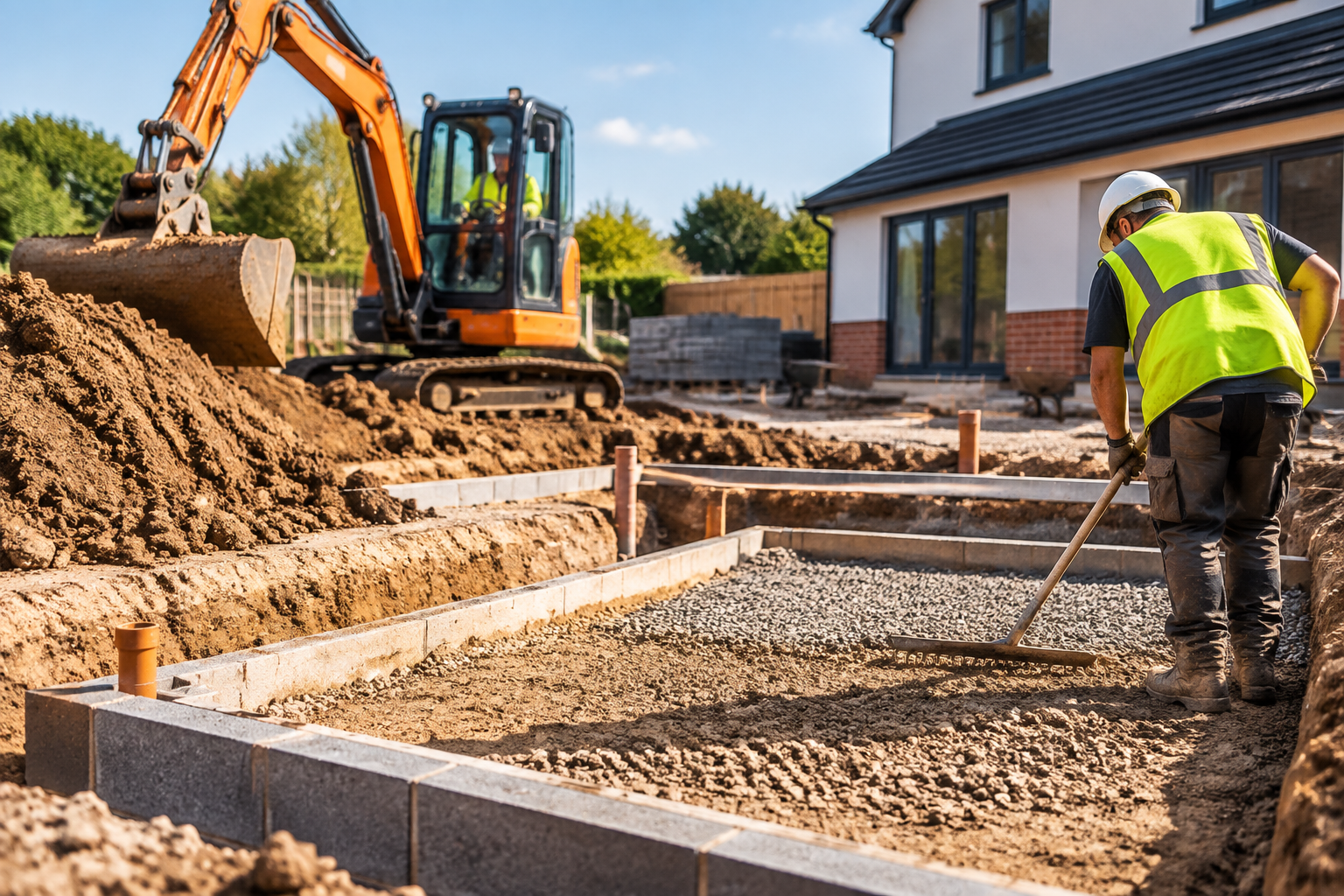
It is important to know the rules and regulations before installing a driveway. If you are going to convert your garden into a parking area using concrete or impermeable surfaces, you may have to face heavy fines for this, as Government regulations in the UK focus on obtaining building approvals for this type of project.
As a homeowner, you should ensure you comply with all the rules and regulations to avoid any legal penalty. Not all driveway construction projects require planning permission. It depends on the drainage system and surface water permeability. In this blog, we will explore everything about planning permission and when it is required for a new driveway.
Understanding the Planning Rules for New Driveways
Planning permission is not mandatory for every driveway installation. You require it if you are not using permeable material or your property doesn’t have a proper drainage system, but if you are using safe material for better surface water management, then planning permission is not required.
Driveway installation with local legislation compliance helps homeowners to maintain accessibility, safety and aesthetic appeal of the property. Understanding the latest driveway installation rules for UK homes is essential to getting timely approval.
When Planning Permission is Required for a New Driveway?
You need planning permission if your driveway is more than five square meters and you are using hard, impermeable material in its installation. You are obliged to get a formal installation approval for a new driveway if:
- It is above the allowed surface area limit
- Surface water runs off to public areas
- You are using impermeable and hard material
Other Situations that Require Driveway Planning Permission
In some situations, a driveway still requires planning permission besides following the drainage or material permeability requirements, including:
- If your driveway installation includes other tasks such as building a wall or gates.
- If your driveway is on a shared route with your neighbours, creating inconvenience.
- If your property is in a listed building or in a conservation area.
- If you want to change your driveway access to a public road.
- If public drains or sewers are under or near your proposed area.
- If you want to create vehicle access across pavement.
When Planning Permission is not Required to Install a New Driveway
Planning permission is not needed when your driveway installation meets the required criteria of surface water and permeable material. Situations that do not need planning permission are:
- Driveway less than five square meters
- Surface water drains naturally
- Use of permeable material
Permeable Vs. Non-Permeable Driveways
Effective drainage plays a major role in the durability of a driveway. A permeable driveway surface allows rainwater to drain naturally through the porous surface, while an impermeable driveway surface directs this water onto pedestrian areas and public roads.
Features | Permeable Driveways | Non-Permeable Driveways |
Water Drainage | Manage drainage naturally | Leads to pooling or runoff issues |
Durability | More durable at low water pressure | Less durable with high water pressure |
Maintenance | Experience fewer issues with the drainage system | Rely on the drainage system to be clear |
Environmental Impact | Supports groundwater to recharge naturally | Requires additional drainage system |
Regulatory Compliance | Meets local codes with planning permission | Needs separate drainage to meet the local codes |
How to Check Whether Your Driveway Needs Planning Permission?
Check your local planning authority to ensure you have planning permission. Consider the location and size of your driveway to know whether your property is located in a conservation area or another protected area.
Consider whether your driveway installation properly manages surface water or uses permeable material. Make sure your driveway is not creating any hurdles for the public or your neighbours. If you are unsure about planning permission, then you can ask the council.
How to Apply for a Driveway Planning Permission?
Apply to the local planning authority through the planning portal if you require planning permission. You need a full application form, ownership details, plans that show your work and an application fee. Check application status according to planning portal guidance to make sure the permission is granted.
Follow these steps to apply for planning permission.
- Gather Paperwork: Including your detailed site plans and materials.
- Submit the Application: With the correct documents or forms.
- Pay the Required Fee: Covering administrative tasks and inspections.
- Schedule Inspections: After approval to ensure regulatory compliance.
Key Factors to Consider Before Applying for Driveway Planning Permission
Driveways improve real estate value by managing rainwater or using permeable materials. Consider these key factors before applying for driveway planning permission.
Local Restrictions
Consider the listed area or local restrictions to determine whether planning permission is required and whether you are following the restrictions.
Drainage
Consider your drainage system, as it is the main thing that the UK Government rules focus on before granting a driveway installation permit.
Material
Choose permeable material for your driveway to reduce runoff, following the rules and regulations before planning or installing a new driveway.
Structure and Design
Make sure that the structural plan of your driveway includes the permitted ground limit and your car porch or ramp stays within permitted boundaries to avoid permit rejection.
Conclusion
Not every driveway requires planning permission, but it depends on the size and location of the area. Moreover, the drainage system, material used and intended purpose are the main factors to consider before installing a new driveway.
A driveway enhances the aesthetic look and value of the property. If you are deciding to install a driveway and don’t know where to start, you can contact Edge to Edge Landscaping, which is a team of professional contractors who will assess your site conditions, choose the best permeable material and ensure regulatory compliance before installing a new driveway.