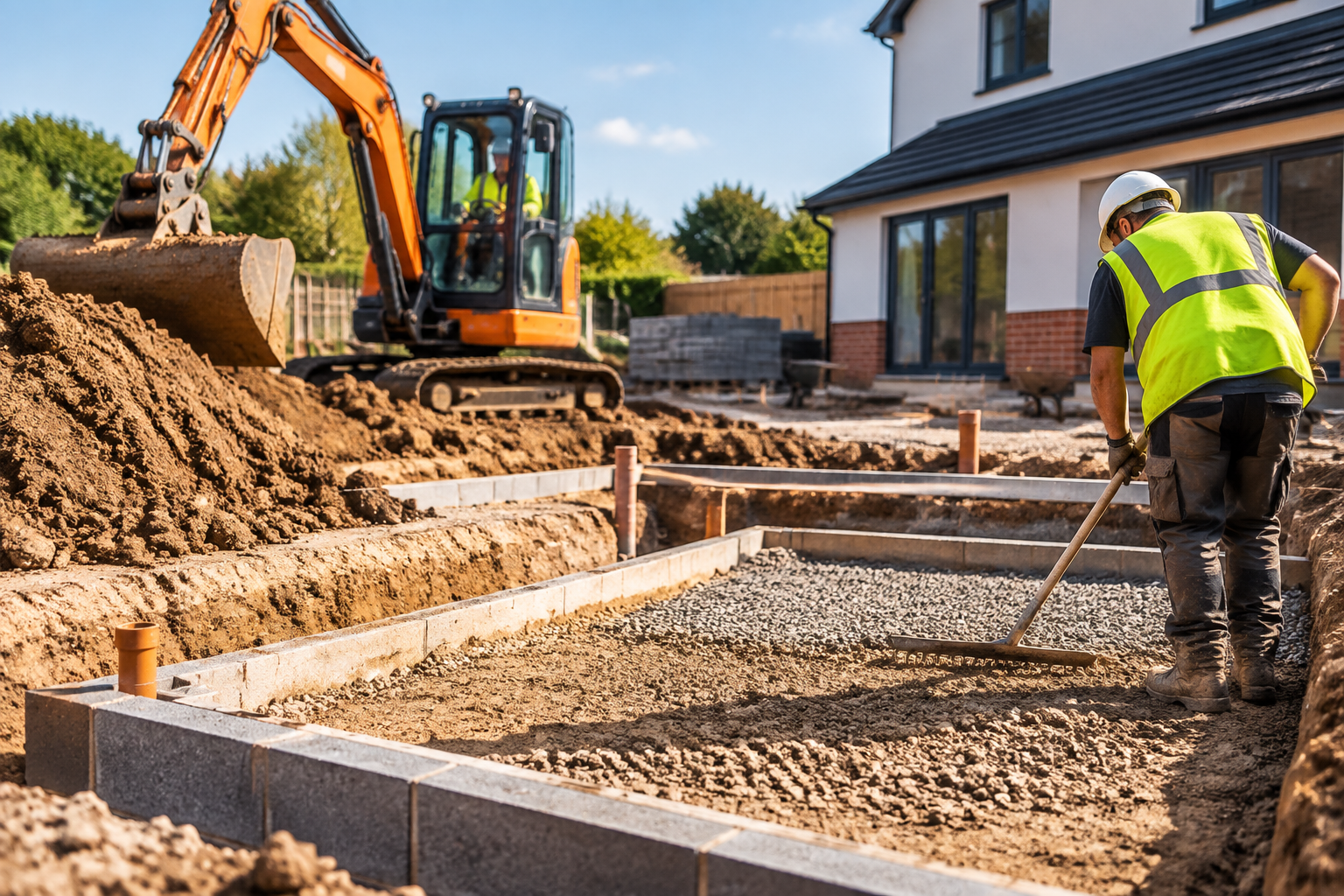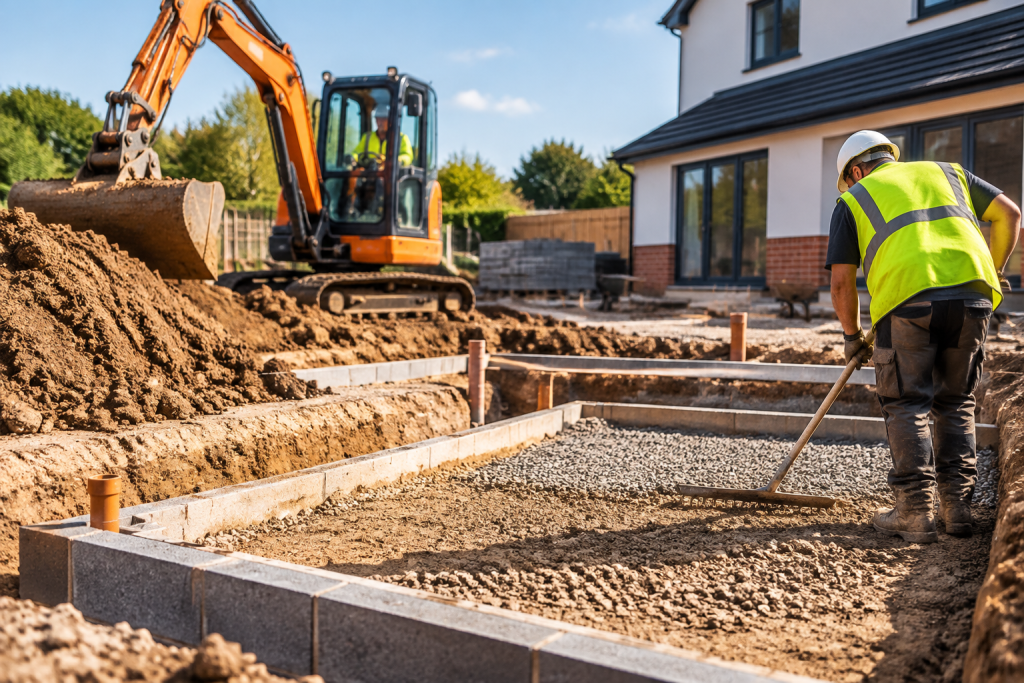
Groundwork is the initial step required before starting any construction project to create a strong base or foundation. The time it takes depends upon several factors, from soil condition and size of area to excavation and levelling.
Groundwork manages drainage and utilities while preventing future problems. It ensures that the structure is safe, stable and built to last. This blog will explore the main factors that affect the groundwork timeline to keep your project on schedule.
What Does Groundwork Involve?
Groundwork is prepared before starting construction, and it includes clearing the site, excavating it, levelling uneven surfaces, building the foundation and installing drainage and utilities such as gas pipes or cables. Key elements of groundwork are:
Site Clearance
Clearing the surface of obstacles, such as removing any existing structures, trees, rocks, old paving and unwanted materials.
Excavation
Digging the surface to a specific depth that is suitable for the foundation and removing the excess or unwanted soil from the surface.
Grading
Creating a stable and even surface by levelling the ground for the foundation. It also improves water flow throughout the structure.
Drainage System
Installing drainage pipes where required to manage surface overflow and to ensure long-term durability of the structure.
Utility Installation
Gas pipes, cables and conduits are installed properly while ensuring their connection to main utility networks for efficiency.
Foundation
Creating a suitable and strong base for the next project or other landscaping features. It is basically a platform on which the entire structure rests.
Factors Affecting Time Required for Groundwork Completion
There is no definite time period to complete groundwork. A large area can take more time, whereas a small area can be quickly prepared. Several factors can influence the time required to complete the groundwork, including:
Size and Scope of the Project
The size and the complexity of the project directly affect its timeline. A small patio design can be completed in a shorter timeline, while a complete garden project requires extra effort and time.
Existing Ground Condition
Soil type and surface condition impact the timeline of groundwork. A waterlogged, rocky, and unstable site is more difficult to treat and requires more excavation, which increases the timeframe.
Weather Condition
Unfavourable weather conditions significantly change the duration. Heavy rainfall, snow and cold temperatures can stop and delay the project until the condition improves.
Site Access
Areas with less access are more difficult to work in and restrict machinery or other materials, requiring more manual work and time, which can prolong the overall project.
Resource Availability
Delays in material delivery, shortage of skilled labour and non-availability of efficient machinery affect the working process of groundwork while increasing the time required to complete it.
Step-by-Step Process of Groundwork
Each project has different requirements for ground preparation, but usually a clear structure is followed for most projects. The complete step-by-step process of groundwork includes:
Site Assessment: Inspecting the area and checking levels
Site Clearance: Removing unwanted materials
Excavation: Digging to the required depth and removing excess waste
Drainage Installation: Installing drainage pipes and soakaways
Sub-Base Installation: Adding suitable sub-base for stable finishing
Compaction and Levelling: Prepared ground is compacted to prevent future settlements.
Final Preparation: Area is checked for installation of landscaping features
How Long Do Different Types of Groundwork Projects Take?
The time required for groundwork depends on the type of landscaping project. A simple garden clearance requires less time compared to deep excavation for drainage and structural foundation. Some of these types are:
Groundwork for Patios
Patio groundwork focuses on stability and water level. It involves site clearance, excavating the area to the required depth, and compacting the sub-base to develop a reliable, strong foundation. Its timeline depends on its size and ground condition.
Groundwork for Driveway
Driveway groundwork must be durable to bear the weight of vehicles. It involves extensive excavation, levelling and compacting the surface to improve water flow for effective drainage system installation. Larger or complex driveways can take more time.
Groundwork for a Lawn
Groundwork preparation for a lawn improves its drainage and promotes growth. It involves removing old turf and debris, soil preparation, excavation, grading and installing new turf while addressing drainage. Significant levelling and soil improvement can take more time.
Groundwork for a Garden
Proper groundwork preparation controls weeds and prevents structural shifts while increasing soil health. It includes removing existing vegetation and structures, preparing soil and managing drainage properly. Its timeframe depends on its size and complexity.
How to Keep Your Groundwork Project on Schedule?
Keeping your project on schedule is all about preparation and experience. Follow these simple tips to manage your groundwork project schedule.
- Review site investigation
- Build a master schedule
- Take ownership
- Communicate with the team
- Ensure resource availability
- Keep weather in consideration
- Monitor the progress
When Should You Hire a Groundwork Contractor?
Hiring a groundwork contractor helps you excavate to the required depth with appropriate levelling and removing excessive waste or materials. This improves your surface condition and makes it ready for the next project. You can hire a groundwork contractor when you are:
- Thinking about new construction
- Clearing your unwanted landscape features
- Resolving your severe drainage problems
- Installing important utility lines
- Preparing outdoor spaces
Conclusion
Groundwork is the backbone of any construction project. It involves site clearance, excavation, grading, drainage and utilities installation and layering a sub-base while compacting the surface to create a strong foundation for construction.
The timeframe it takes depends upon several factors, including the size and scope of the project, site conditions, weather conditions and resource availability. If you are planning a small patio in the garden of your home, you can contact Edge To Edge Landscaping for groundwork preparation with precision.